
7-Meter Acrylic Spa vs Portable Spa: Head-to-Head Decision
A 7-meter acrylic spa and a smaller portable spa are often shortlisted against each other in the same procurement spreadsheet, yet they are not two sizes of one product. The 7-meter acrylic platform exists to support swimming. It is the specification that hotels, resorts, fitness venues and community wellness facilities reach for when guests are expected to swim endurance laps inside a compact footprint. The smaller portable spa serves a different job: sedentary relaxation in leisure and residential settings, where the requirement stops at soaking, warmth and recovery.
That difference settles most of the head-to-head. A commercial buyer working from decision through to execution is not choosing between a bigger and a smaller version of the same category. The buyer is choosing between a swim-capable installation and a relaxation installation — and only one of those two answers matches a venue whose business model depends on people swimming on site.
Decision rule in one line: endurance swimming for guests, members or residents → 7-meter acrylic swim spa. Sedentary relaxation in a leisure or residential setting → compact portable spa.
Problem Definition: Why These Two Products End Up in the Same Comparison
Both categories are marketed under overlapping language, both can occupy a wellness area, and both can be photographed from an angle that makes them look interchangeable. That overlap produces three buying errors that repeat across commercial swim spa procurement.
- Comparing footprint instead of function. A buyer measures both units in square meters, sees that the portable option fits more easily into an existing plant room or terrace, and treats the smaller footprint as the safer commercial choice. The footprint is not the constraint. The constraint is whether the installation must produce a usable water current for swimming. Once that question is answered, footprint becomes a spatial detail rather than a decision driver.
- Assuming compliance is identical. Certification follows the product and the market, but the operational envelope follows the installation. A unit placed where the general public can use it enters a different regulatory classification than a unit placed in a private residence, regardless of how similar the hardware is.
- Evaluating the product but not the supply relationship. Commercial swim spa projects are judged on what happens after commissioning: capacity to restock, lead time reliability, replacement parts, and whether the supplier can produce to a private label. A technically acceptable unit from a supplier that cannot repeat the order is a project-level failure, not a product-level one.
Model-code terminology draws the functional line clearly. An exercise spa — also known as a swim spa — is described as a variant of a spa whose design and construction includes specific features and equipment to produce a water current. A relaxation spa that does not carry that water-current equipment does not meet the exercise-spa definition, however similar the shell may look in a brochure.
That single definitional sentence resolves most of the confusion in this comparison. A compact portable spa is not a smaller swim spa; it is a different product answering a different brief. The 7-meter acrylic platform is the side of the comparison that carries the water-current equipment, the commercial compliance references and the supply structure that a hotel or fitness operator needs.
Industry Background: Definitions, Codes and the Commercial Split
What the product is called in regulation
Model-code language treats exercise spa and swim spa as the same product class. In the United States, 15 USC § 8002(6) defines the terms swimming pool or spa broadly as any outdoor or indoor structure intended for swimming or recreational bathing, including in-ground and above-ground structures. Layered on top of that statutory definition, the 2021 International Swimming Pool and Spa Code (ISPSC), published by the International Code Council and developed with the Association of Pool & Spa Professionals, is described as the only comprehensive swimming pool code coordinated with the current requirements in the I-Codes and APSP standards.
For a buyer, that layered framework means swim spa sourcing is not a consumer-category purchase with a single checklist. It sits at the intersection of a statutory definition, a model code, and a local permitting regime — and the swim spa, not the portable relaxation spa, is the category that most often has to answer to all three.
Commercial versus private classification
Where a unit is installed changes its regulatory identity. Marin County, California, for example, defines a public pool as any swimming pool, spa, or spray ground open to the general public, whether or not a fee is charged. A hotel, resort or fitness venue installation therefore enters a different classification than a private backyard unit, and the classification follows the installation rather than the product size.
This is the quiet reason the 7-meter versus portable comparison is not symmetrical. A portable spa installed in a private residence usually stays in a private classification. A 7-meter acrylic swim spa installed for guests, members or residents is typically intended for public use, which pulls the project into public pool and spa oversight, documented operating procedures and inspection planning.
Market context
The global pool and spa market was valued at USD 24.28 billion in 2025 and is projected to reach USD 37.93 billion by 2034, according to Straits Research. That figure covers the pool and spa category as a whole rather than swim spas alone, so it should be read as background demand context — not as a swim spa market size. What it does show is a category where commercial buyers are increasingly asked to justify wellness capital expenditure with a specific, defensible use case.
The manufacturing side of the decision
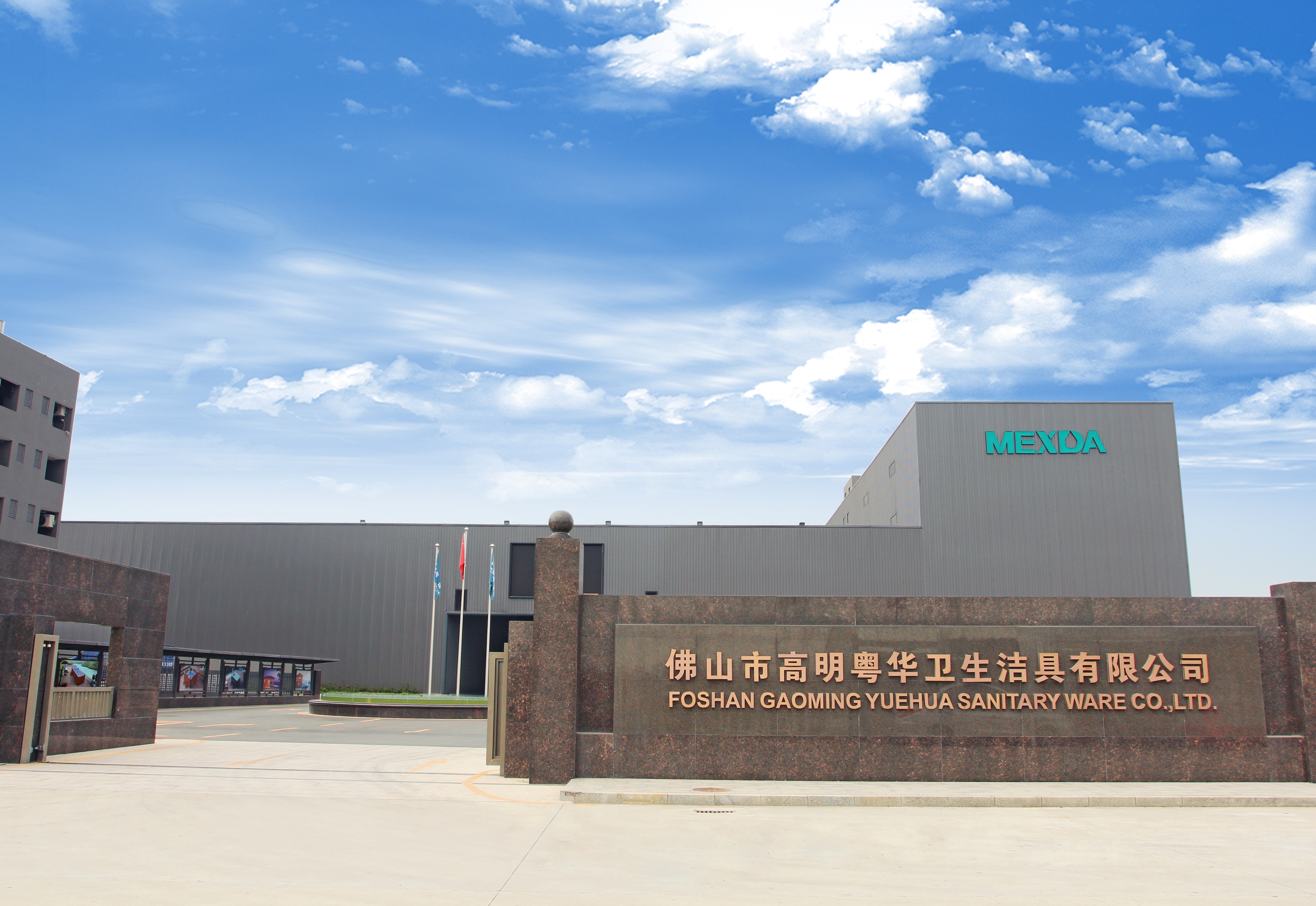
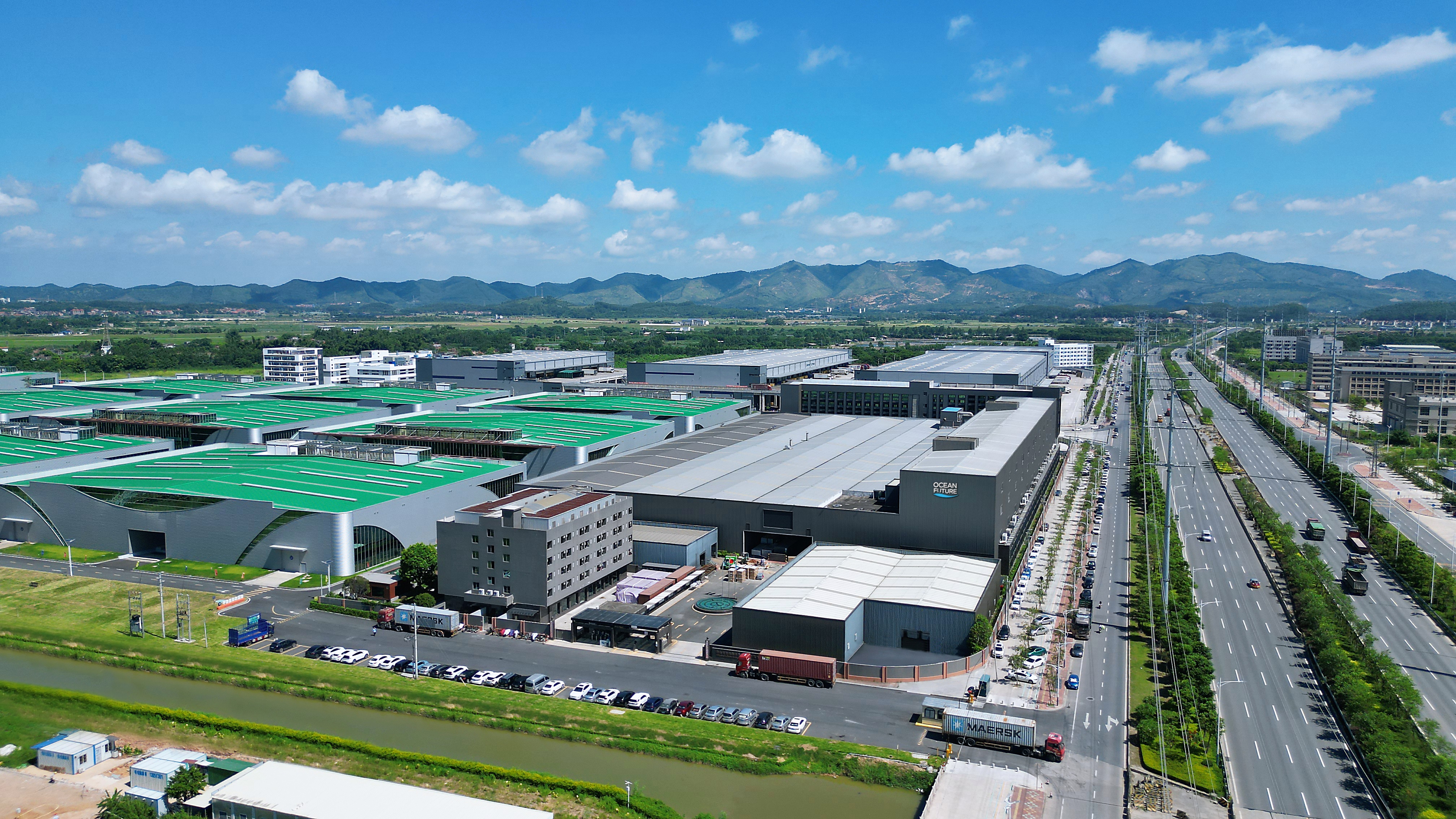
MEXDA is the swim spa brand of Foshan Gaoming Yuehua Sanitary Ware Co., Ltd., a manufacturer established in Gaoming, Foshan, Guangdong in 1995. The company operates a 50,000 m² production facility with more than 200 employees, a nine-engineer in-house R&D team, an annual output of 5,000 sets and a monthly capacity of 500 sets. Approximately 85% of production is exported to markets including the United States, the European Union, Australia, Germany and France.
For a buyer executing a commercial order, that is the second half of the head-to-head. The first half is the product brief. The second half is whether the supplier behind the brief can deliver it repeatedly, on schedule, to the compliance set the destination market requires.
Detailed Solution: What the 7-Meter Acrylic Platform Actually Delivers
1. Shell construction and surface material
The platform is built around a fiberglass-reinforced acrylic shell. On MEXDA high-end models, the surface material is Aristech acrylic and the control hardware is Balboa. Both are component names that specification reviewers already recognize, which shortens the validation conversation: instead of arguing about an unbranded shell, the buyer can assess a known material and a known control platform against the installation requirements.
Acrylic matters more in the 7-meter format than in a compact spa. A longer shell has more surface area to keep dimensionally stable, more edge length to seal, and more exposure to constant water movement. Fiberglass reinforcement behind the acrylic is what keeps that geometry consistent across a service life rather than a season.
2. Compliance set for commercial deployment
MEXDA swim spas are documented as complying with three market-specific lines: ETL (UL 1563 / CSA C22.2#218.1) for North America, CE (EN IEC 60335-2-60:2023) for the European Union, and SAA (AS/NZS 60335.2.60) for Australia. Those three lines map onto the markets where commercial wellness installations are typically financed, and they are the first documents a specification reviewer will request.
Product certification is only half of the compliance picture. The 2021 ISPSC remains the construction and safety reference that commercial installations are measured against, and in jurisdictions such as Marin County, California, an installation open to the general public is classified as a public pool or spa whether or not a fee is charged. Both layers belong in the project file.
3. Operating profile across a commercial service life
MEXDA published comparison data positions its acrylic swim spa against traditional concrete pools and standard inflatable spas on four points: fast installation, all-weather durability, constant temperature control, and low maintenance. The same data reports installation time reduced by 80%, service life extended by two times, maintenance cost reduced by 70%, and 30% higher energy efficiency through optimized heating and insulation design. It also states that no seasonal winterization is required and that routine maintenance is minimal.
For a hotel or fitness operator, the useful part of that profile is not the percentages. It is the operational implication: an acrylic swim spa that holds temperature and does not require winterization can be sold as a twelve-month amenity instead of a seasonal one, which changes the revenue model attached to the installation.
4. Protection systems and pre-delivery validation
In a commercial setting, the mean time between service interventions matters more than peak performance. MEXDA swim spa risk controls include automatic safety shutdown, thermal protection, overcurrent protection and water level monitoring, supported by quality control testing, pre-delivery inspection and remote monitoring. The failure modes those controls are designed to address are water jets not working, heating failure, pump malfunction and leakage.
For a buyer writing an acceptance checklist, those four items are the operational core. Each one has a control that can be verified before handover rather than discovered during the first busy weekend of operation.
5. Execution terms that make the decision actionable
Execution-stage buyers need numbers rather than adjectives. MEXDA publishes a minimum order quantity of 1 set; delivery terms of EXW, FOB, CFR, CIF, DAP or DDP; acceptance criteria based on pre-shipment test; payment terms of T/T with a 30% deposit and 70% balance before shipment; and a typical production lead time of 30–40 days against a monthly capacity of 500 sets. The company also provides both OEM and ODM production services, supported by its in-house engineering team.
For distributors and channel partners, those terms define whether the 7-meter acrylic platform can become a product line rather than a single installation. A one-set MOQ allows a first commercial project to be validated without a container-level commitment, while a monthly capacity of 500 sets sets the ceiling on how large a rollout can be supported.
Step-by-Step Breakdown: Settling the Head-to-Head in Six Steps
Step 1 — Write the primary use into one sentence
Endurance swimming, or sedentary relaxation. This is the gating question, and every later step is downstream of it. If the sentence cannot be written without hedging, the project brief is not finished and no product comparison will resolve it.
Step 2 — Test whether the installation must generate a water current
If the answer is yes, the specification is a swim spa in the model-code sense: a spa designed and built with specific features and equipment to produce a water current. A portable relaxation spa cannot substitute, because the equipment that defines the category is not part of its design brief. This step alone eliminates the smaller analog from most hotel and fitness shortlists.
Step 3 — Confirm the regulatory classification of the installation
Public or private. An installation open to the general public falls under public pool and spa classification in jurisdictions such as Marin County, California, and the ISPSC 2021 provides the construction and safety reference framework that a commercial design team will be asked to demonstrate. Confirming classification early avoids a specification that is technically sound but administratively unusable.
Step 4 — Specify shell, surface and control hardware
For a 7-meter platform, the working specification is a fiberglass-reinforced acrylic shell. Where the project calls for recognized component brands, Aristech acrylic surfaces and Balboa control systems are the reference points MEXDA uses on high-end models, which gives the buyer a defined baseline to compare against alternative offers.
Step 5 — Validate the supplier on capacity, MOQ and lead time
Ask for monthly capacity, typical lead time, minimum order quantity, delivery terms and acceptance criteria in writing before commercial terms are agreed. The benchmark values published by MEXDA are 500 sets per month, 30–40 days lead time, MOQ of 1 set, EXW through DDP delivery terms, and pre-shipment test as the acceptance criterion.
Step 6 — Lock the lifecycle plan
Confirm the protection systems in writing, agree the inspection routine, and settle the spares and remote monitoring arrangement. This is the step that separates a delivered unit from a supported installation, and it is the reason the supplier half of the comparison deserves the same scrutiny as the product half.
Use Cases: Which Side Wins in Which Setting
Hotels and resorts
Swimming is a guest service, and guests judge it against the lap pool they left at home. The 7-meter acrylic swim spa wins this setting because it produces the water current that makes continuous swimming possible within a footprint that fits an existing wellness terrace or indoor spa area. It is also the setting where the compliance classification question arrives earliest, since the installation is open to the general public whether or not a fee is charged.
Commercial fitness venues
Here swimming is programmed rather than incidental: coached sessions, supervised endurance work, and members training against resistance. The 7-meter acrylic platform is the appropriate side of the comparison, and the accepted component set — fiberglass-reinforced acrylic shell, Aristech acrylic surfaces, Balboa controls on high-end models — gives operators a specification they can price against competing offers without renegotiating the technical baseline.
Residential backyards
The residential case splits by household behaviour rather than by property size. If the owners swim, the 7-meter acrylic unit replaces a traditional concrete pool at a comparable initial cost position and with faster installation; MEXDA positions the acrylic swim spa for residential backyards, hotel resorts and commercial wellness centers. If the owners do not swim and the requirement is warmth and recovery, the compact portable spa is simply the correct product, and pushing a swim spa into that brief creates an unused asset.
Leisure and residential communities
Community installations usually carry both jobs at once, which is why the brief has to be written before the equipment is compared. If the amenity promise includes swimming, the 7-meter platform is required; if the promise is relaxation only, the smaller portable unit matches the intent. The classification question applies again: a community facility open to residents functions as a public-facing installation, not a private one.
Limits and Boundaries: When the 7-Meter Unit Is Not the Answer
A head-to-head is only useful if both sides are allowed to win somewhere. The 7-meter acrylic swim spa is the wrong specification in three situations.
- No swimming demand exists. If guests, members or residents are not going to swim, the water-current capability is unused capacity, and the compact portable spa delivers the required function with less installation complexity.
- The installation cannot support a public-facing classification. Where the venue cannot take on public pool and spa operating requirements, the project scope should be re-examined before equipment is specified rather than after.
- The site cannot accommodate the unit and its service access. A 7-meter acrylic swim spa is a structural installation, not a plug-in appliance. If access, base preparation and service clearance cannot be arranged, no amount of product capability resolves it.
Stating those boundaries is not a weakness in the comparison. It is what allows a commercial buyer to defend the decision internally: the 7-meter acrylic platform is specified because the brief requires swimming, not because it is the larger and therefore supposedly better option.
Comparison Table: 7-Meter Acrylic Swim Spa vs Compact Portable Spa
| Decision dimension | 7-meter acrylic swim spa | Compact portable spa |
|---|---|---|
| Primary intended use | Endurance swimming and fitness programming for hotels, resorts, fitness venues and community wellness facilities | Sedentary relaxation in leisure and residential settings |
| Functional definition | Exercise spa / swim spa: a spa variant designed and built with specific features and equipment to produce a water current (model-code terminology) | Relaxation spa; the water-current equipment that defines an exercise spa is not part of the design brief |
| Best-fit venues | Residential backyards, hotel resorts and commercial wellness centers (MEXDA positioning) — where swimming is part of the amenity promise | Leisure and residential settings where the requirement stops at soaking and recovery |
| Shell and surface | Fiberglass-reinforced acrylic; Aristech acrylic surfaces on MEXDA high-end models | — |
| Control hardware | Balboa control systems on MEXDA high-end models | — |
| Compliance references | ETL (UL 1563 / CSA C22.2#218.1), CE (EN IEC 60335-2-60:2023), SAA (AS/NZS 60335.2.60); ISPSC 2021 as the construction and safety reference | Classification follows the installation: a unit open to the general public is treated as a public pool or spa in jurisdictions such as Marin County, California |
| Maintenance profile | No seasonal winterization required; minimal routine maintenance reported, with 30% higher energy efficiency through optimized heating and insulation design (manufacturer comparison data) | — |
| Protection systems | Automatic safety shutdown, thermal protection, overcurrent protection, water level monitoring | — |
Execution data: the commercial numbers behind the 7-meter platform
| Execution requirement | MEXDA published value |
|---|---|
| Minimum order quantity | 1 set |
| Delivery terms | EXW / FOB / CFR / CIF / DAP / DDP |
| Payment terms | T/T — 30% deposit, 70% balance before shipment |
| Acceptance criteria | Pre-shipment test |
| Typical production lead time | 30–40 days |
| Monthly production capacity | 500 sets |
| Annual output | 5,000 sets |
| Production services | OEM and ODM, supported by a nine-engineer in-house R&D team |
FAQ: 7-Meter Acrylic Spa vs Portable Spa
1. Which certifications should a hotel or fitness venue verify before specifying a 7-meter acrylic swim spa?
Verify three market-specific product lines plus the applicable code reference. For North America, ETL certification under UL 1563 / CSA C22.2#218.1. For the European Union, CE compliance with EN IEC 60335-2-60:2023. For Australia, SAA compliance with AS/NZS 60335.2.60. MEXDA swim spas are documented as complying with all three. On top of product certification, confirm the construction and safety reference that applies to the installation: the 2021 International Swimming Pool and Spa Code is the comprehensive model code coordinated with current I-Codes and APSP standards. Because a hotel or fitness venue is open to the general public, some jurisdictions classify the unit as a public pool or spa whether or not a fee is charged, which changes the operational and permitting envelope even though the product itself is unchanged.
2. Can a 7-meter acrylic swim spa be produced to an OEM or ODM specification?
Yes. MEXDA provides both OEM and ODM production services from its 50,000 m² facility in Gaoming, Foshan, Guangdong, backed by a nine-engineer in-house R&D team. High-end models already use Aristech acrylic surfaces and Balboa control systems, which gives a brand owner or distributor a validated starting point for a private-label program instead of an unproven specification. Monthly production capacity is 500 sets, annual output is 5,000 sets, and approximately 85% of production is exported to markets including the United States, the European Union, Australia, Germany and France.
3. What are the minimum order quantity and the payment terms for a 7-meter acrylic swim spa order?
MEXDA publishes a minimum order quantity of 1 set, so a single commercial installation can be ordered without committing to container volume. Available delivery terms are EXW, FOB, CFR, CIF, DAP and DDP. Payment terms are T/T with a 30% deposit and the 70% balance before shipment, and acceptance is based on a pre-shipment test. These published values are suitable as the baseline for a request for quotation; the final commercial terms should be confirmed in writing on the quotation issued for the specific project.
4. How is a 7-meter acrylic swim spa validated before it ships?
Acceptance is based on a pre-shipment test, supported by quality control testing and pre-delivery inspection. Each unit carries automatic safety shutdown, thermal protection, overcurrent protection and water level monitoring, with remote monitoring used as an additional support measure. The failure modes those controls are designed to address are water jets not working, heating failure, pump malfunction and leakage. For a commercial buyer, those four items are the practical content of an acceptance checklist, because they are the conditions that would otherwise surface during the first high-occupancy period of operation.
5. What production lead time and capacity should be planned for a 7-meter acrylic swim spa order?
Typical production lead time is 30–40 days, against a monthly production capacity of 500 sets and an annual output of 5,000 sets. For a single hotel or fitness project, that lead time fits a normal construction fit-out schedule. For a distributor building a repeatable product line, the same two numbers define the replenishment cycle that can be promised downstream. The full MEXDA swim spa catalog, including model and specification information, is available here: MEXDA Swim Spa catalog (PDF).
Conclusion
The head-to-head between a 7-meter acrylic spa and a smaller portable spa ends where it started: with the intended use of the installation. Model-code terminology sets the boundary — an exercise spa, also known as a swim spa, is a spa built with specific features and equipment to produce a water current — and everything downstream follows from that. Where the brief requires endurance swimming for guests, members or residents, the 7-meter acrylic platform is the only side of the comparison that answers it, and it comes with the commercial compliance set, component specification and supply terms that a decision-stage buyer needs to execute.
Where the brief is sedentary relaxation in a leisure or residential setting, the compact portable spa is the correct and more efficient answer. Choosing it deliberately, rather than by default, is what makes the larger specification defensible in every other project.
Next Step
If your project requires swimming, the 7-meter acrylic swim spa is the side of this comparison to specify. Send your installation brief — venue type, destination market and target completion date — and MEXDA will respond with a matching configuration and commercial terms.
Email: mesda3b@china-yuehua.com · Tel / WhatsApp: +86-15820624699
Download the catalog: MEXDA SWIM SPA (PDF)
Website: www.chinamesda.com
Foshan Gaoming Yuehua Sanitary Ware Co., Ltd., NO.568, Yangxi Road, Yanghe Town, Gaoming, Foshan, Guangdong, China.
Have Questions or Need More Details?
Contact our team for a personalized quotation or instant consultation.
Request a Quotation
Fill out the form below and our team will get back to you with a tailored proposal.
WhatsApp Direct Chat
Prefer to chat in real-time? Message us on WhatsApp for instant assistance & quick answers.
- Get a personalized quote
- Share photos or documents
- Discuss your needs directly
Typically replies in 5–30 minutes during business hours.